
G7272
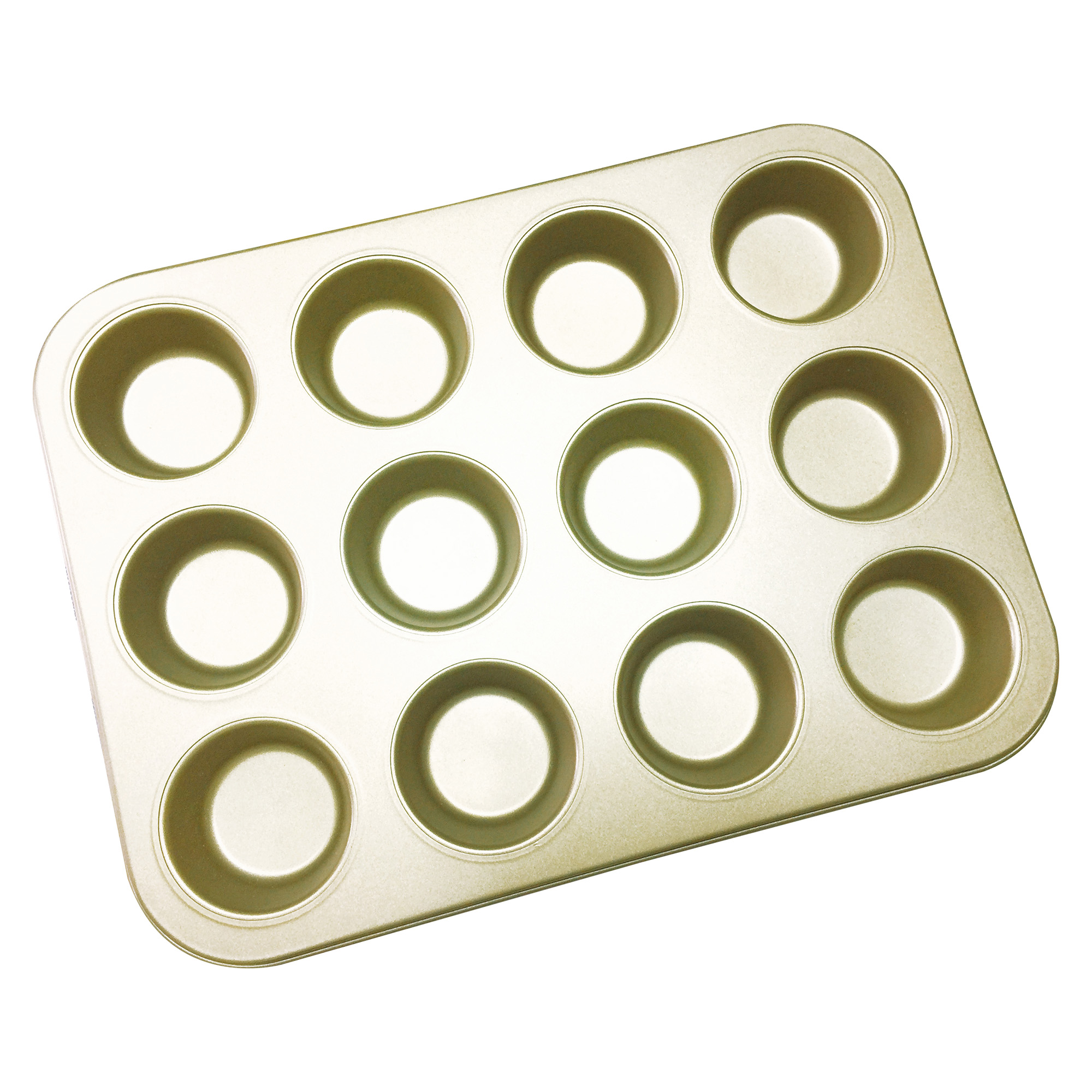
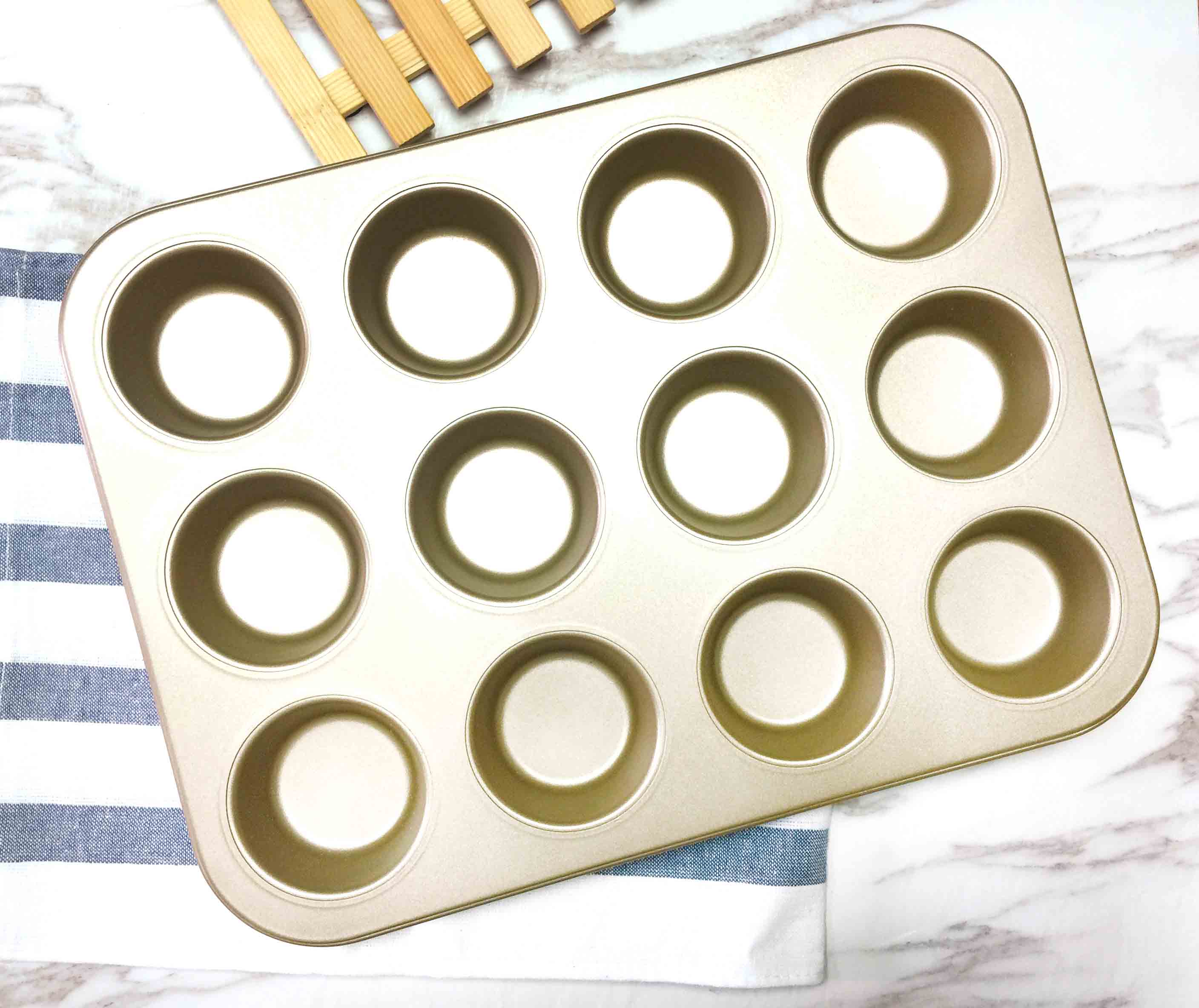
12-Cavity Nonstick Cup Shaped Baking Pan
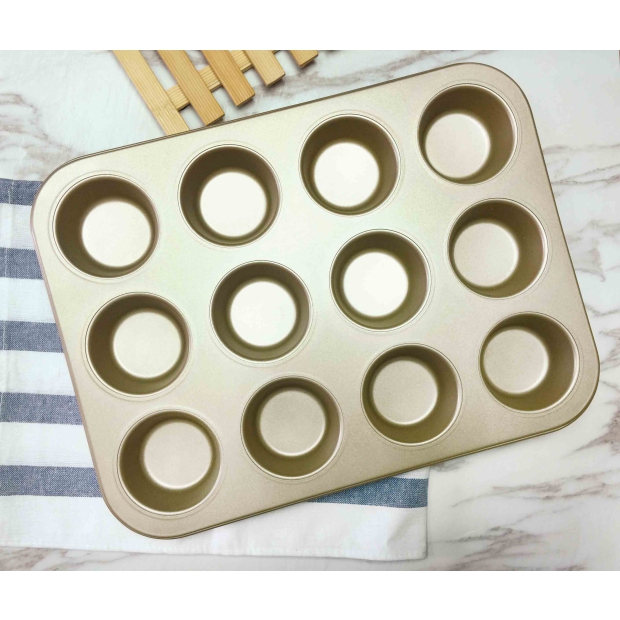
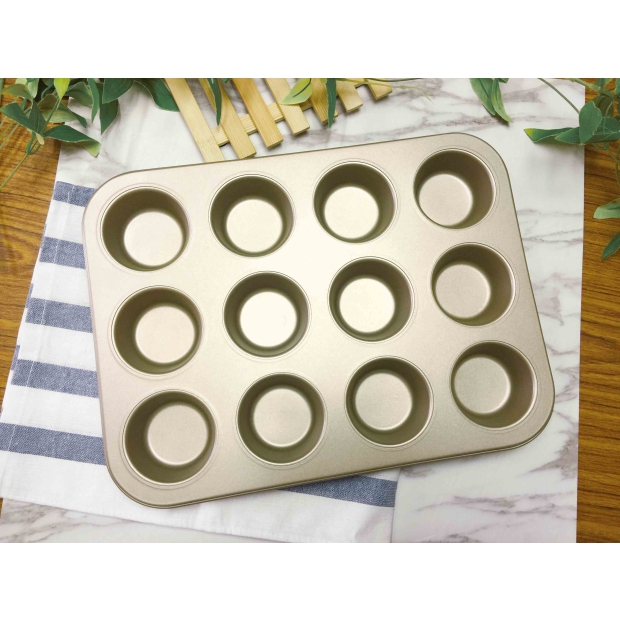
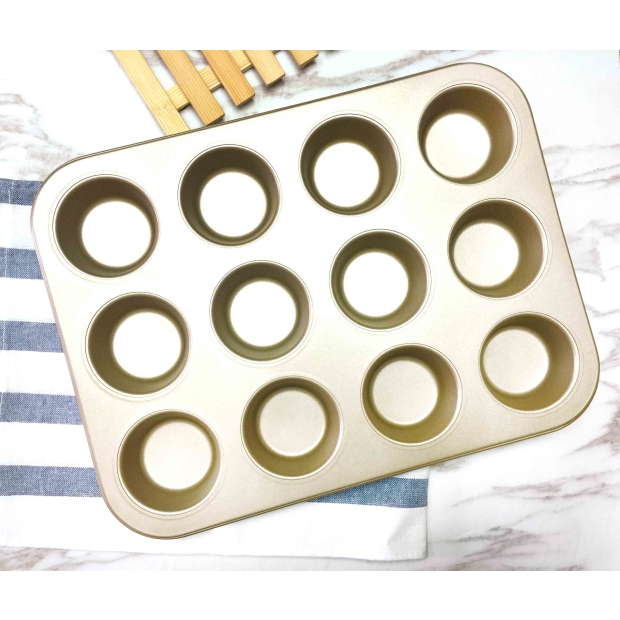
This 12-cavity non-stick round baking pan is designed for both home and professional baking, allowing you to bake multiple round desserts or cupcakes at once with ease.
PTFE non-stick coating ensures smooth unmolding, easy cleaning, and a durable finish.
Product Features:
- 12-cavity design for baking multiple desserts at once
- Non-stick coating for easy unmolding and cleaning
- High-quality carbon steel material for even heat distribution, high temperature resistance, and minimal deformation
- Suitable for home ovens and bakeries
- Multi-purpose baking pan for making cupcakes, madeleines, brownies, jellies, etc.
Product Specifications:
- Model: G7272
- Material: Steel + PTFE (Polytetrafluoroethylene) coating
- Coating heat resistance: 250℃
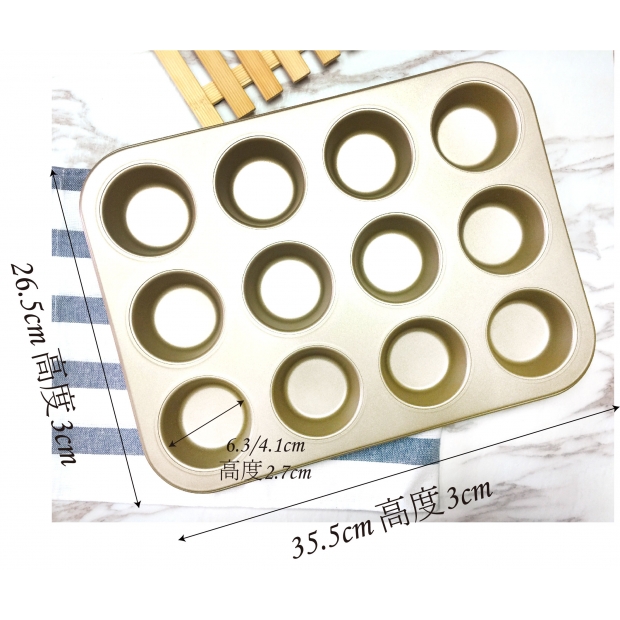
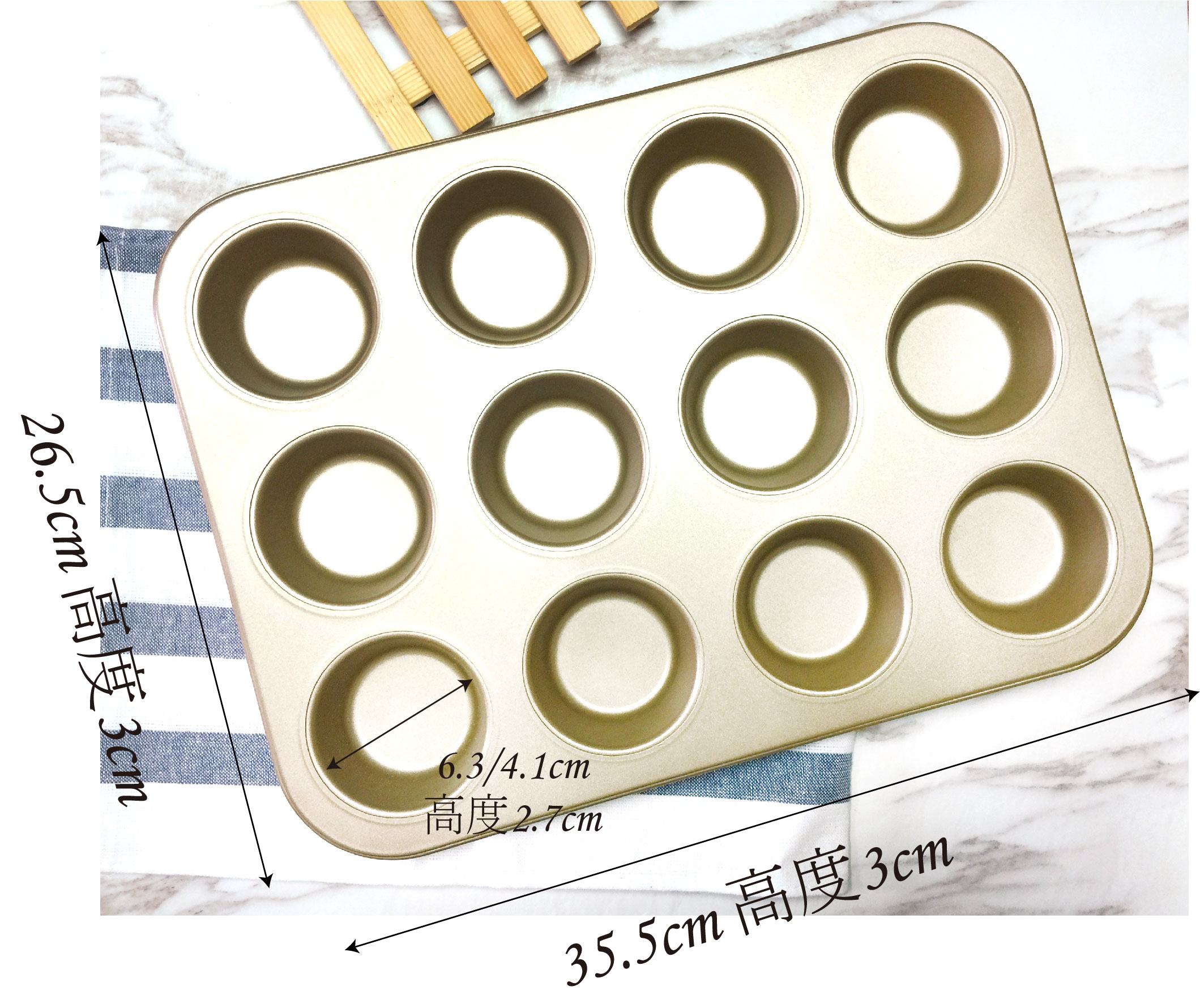
- Baking pan dimensions: Length 26.5 × Width 35.5 × Depth 3 cm ±3%
- Single cavity dimensions: Diameter 6.3 / 4.1 cm × Depth 2.7 cm ±3%
First-time Use Recommendations:
- Wash and dry.
- Apply a thin layer of butter or cooking oil to aid shaping and unmolding.
- Recommended baking temperature ≤ 230°C.
- Avoid dry heating (heating an empty mold).
- Use plastic or silicone utensils for unmolding.
- Do not scratch the coating with sharp metal tools.
- Do not expose to open flames or electric stoves.
- Do not put in a dishwasher.
- Wash only after the baking mold has completely cooled.
- Soak any sticky food in the mold to soften it.
- Hand wash with a soft sponge and neutral detergent.
- After washing, dry and store in a cool, dry place.
- For long-term storage, you can dry at 80°C for 5–10 minutes before sealing.
- Avoid collisions and friction that could damage the coating.